Rheumatism Route
For people with rheumatism who, alongside their medical treatment, are seeking help with mobility, fatigue, work and everyday life.
Support for everyday life with rheumatism
You have rheumatism and are probably already receiving medical care for this from your GP, rheumatologist or another healthcare professional. They help you, for example, with examinations, medication and the treatment of your rheumatism.
However, rheumatism can also affect your daily life. For example, it can affect your mobility, sleep, eating, work, energy levels or how you feel. During an appointment with your GP or rheumatologist, there isn’t always enough time to discuss all these topics in detail.
There is plenty of support available for people with rheumatism. Various healthcare providers and organisations offer this support. This can make it difficult to know where to turn and where best to start.
That is why we at Rondom have launched the Rheumatism Route. You will be assigned a dedicated case manager who will work with you to assess your situation. What is going well? What challenges are you facing? And what is important to you? You will then work together to identify the support that best suits your needs. Your case manager will help you get started with this and will work with you to keep track of everything.
At Rondom, healthcare professionals from various disciplines work together within a single organisation. They coordinate their support so that you do not have to work out for yourself who to turn to and how the various pieces of advice fit together.
Keep doing what matters to you


Our approach
Rheumatism often has more consequences than just pain or stiff joints. You may be moving less because you are in pain. As a result, your muscles may weaken and you may tire more quickly when moving. Fatigue can make it harder to work, do housework or keep up with social activities. Stress and poor sleep can also make your symptoms worse.
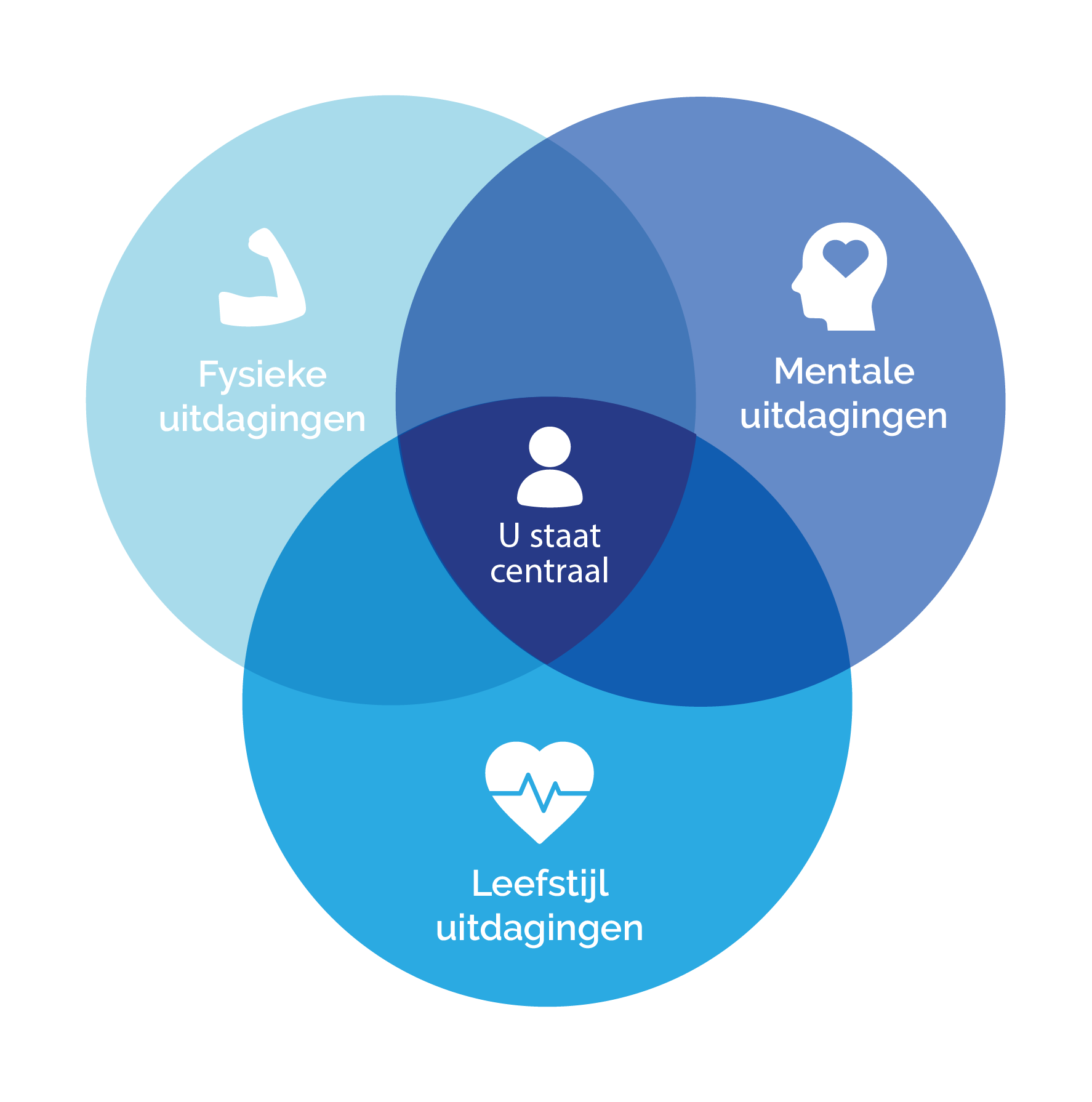
That is why, within the Reuma Route, we look at various aspects of your health and daily life:
- In physical terms, for example, we look at pain, stiffness, tiredness, movement, strength and fitness;
- In terms of mental health, for example, we look at worries, uncertainty, low mood and coping with the effects of rheumatism;
- When it comes to lifestyle, for example, we look at sleep, recovery, nutrition, exercise and how you manage your energy.
So we don’t just look at your joints and symptoms, but also at what you want to continue doing – or be able to do again – in your daily life.
That doesn’t mean you need help with everything. Together, we’ll look at what kind of help suits you best and what you want to achieve. Sometimes help in one area is enough. Sometimes help is needed in several areas.
Case manager
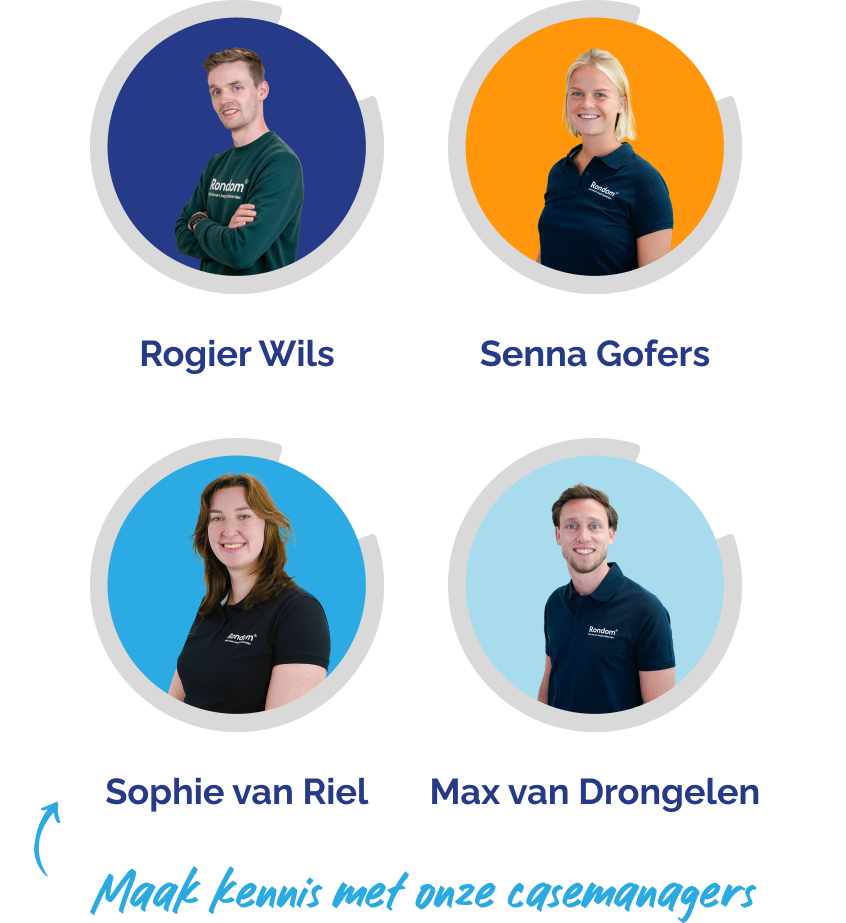
The Rheumatism Route begins with a discussion with your case manager. This person will be your designated point of contact throughout the Route. Together, you will discuss what rheumatism means for your daily life, what care you are already receiving and what matters most to you. You will also work out together what support is right for you and where best to start.
You always have a say in what you want to achieve, what support you receive and how quickly you make progress.
The case manager helps you keep track of things and ensures that your care providers work well together. You also discuss how things are going on a regular basis. Have your symptoms changed, or has your ability to cope or what you consider important changed? If so, you will discuss together whether the plan needs to be adjusted.
If necessary, your case manager will consult with your GP, rheumatologist or other healthcare professionals. This will be done with your consent. This means you do not have to arrange all your care yourself and you know who to turn to.
The Reuma Route is a supplement to your medical care. Your GP and rheumatologist remain responsible for examinations, medication and the medical treatment of rheumatism.
Would you like to know more about the role of the case manager? Read more here about the case manager within our Health Pathways.
Which healthcare providers might be involved?
Within the Rheumatism Route, various healthcare professionals can help you. Which healthcare professionals you need depends on your symptoms, your questions and what you wish to achieve.
- Physiotherapist: helps with mobility, strength, fitness, stiffness and confidence in your body.
- Occupational therapist: helps with managing energy, daily activities, assistive devices and work.
- Podiatrist: assesses foot problems, walking, pressure under the feet and suitable footwear.
- Medical pedicure: helps with nail, skin and pressure problems affecting the feet.
- Lifestyle coach: supports sleep, recovery, exercise and daily routines.
- Psychologist: helps with worries, low mood, uncertainty and coping with the effects of rheumatism.
- Dietitian: provides advice on nutrition, weight and eating habits.
These healthcare professionals work together within Rondom. They consult with one another where necessary, to ensure their advice is well aligned. For example, they can work together to help you find ways to be more active whilst managing your energy levels effectively.

Support, even between appointments
Within the Reuma Route, you will receive support in various ways. You will have meetings with your case manager and, where necessary, receive help from other healthcare professionals. But you can also take action yourself between appointments. To help with this, you will be given an app that you can use whenever it suits you.
In the app, for example, you can:
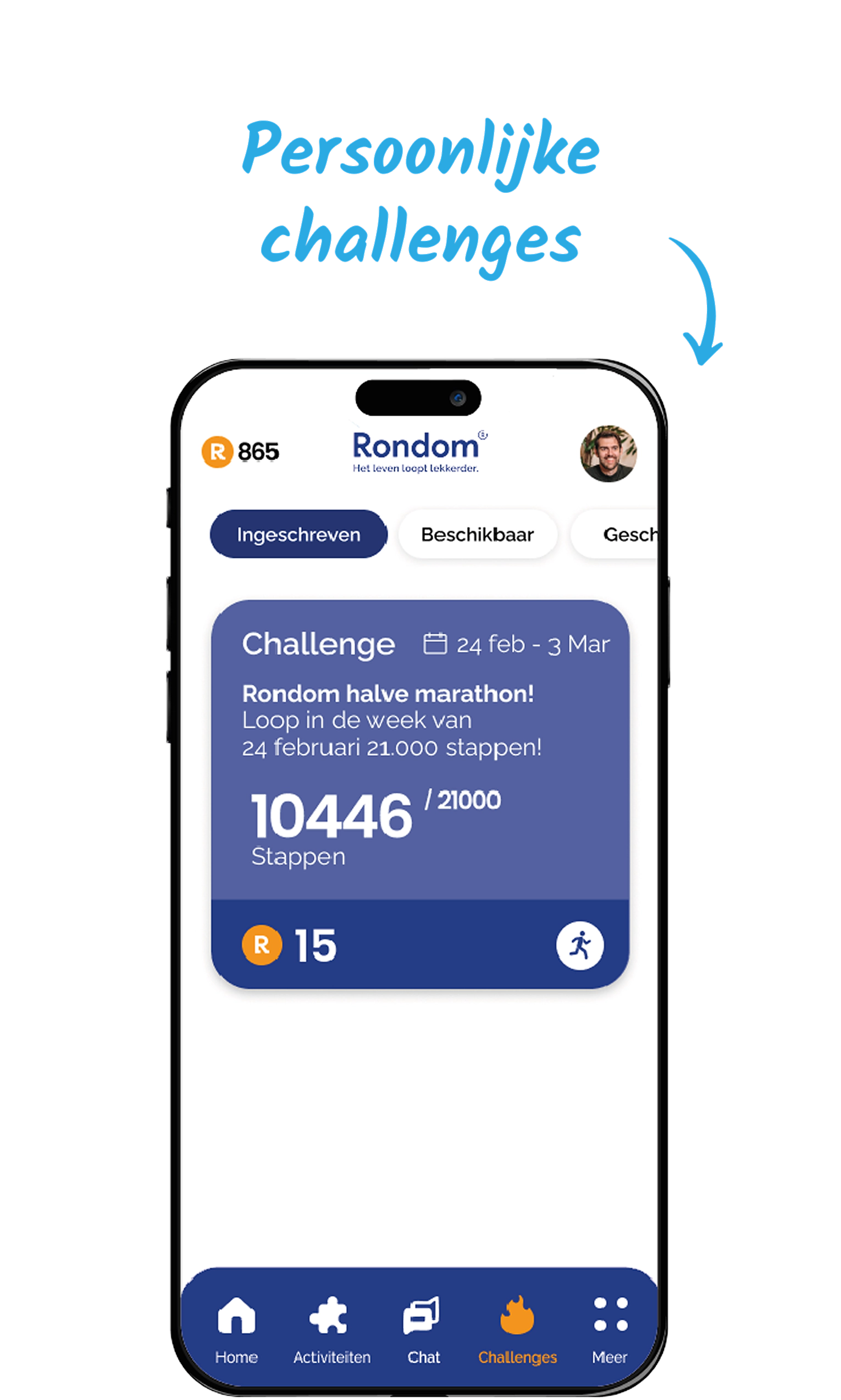
- review your appointments and goals;
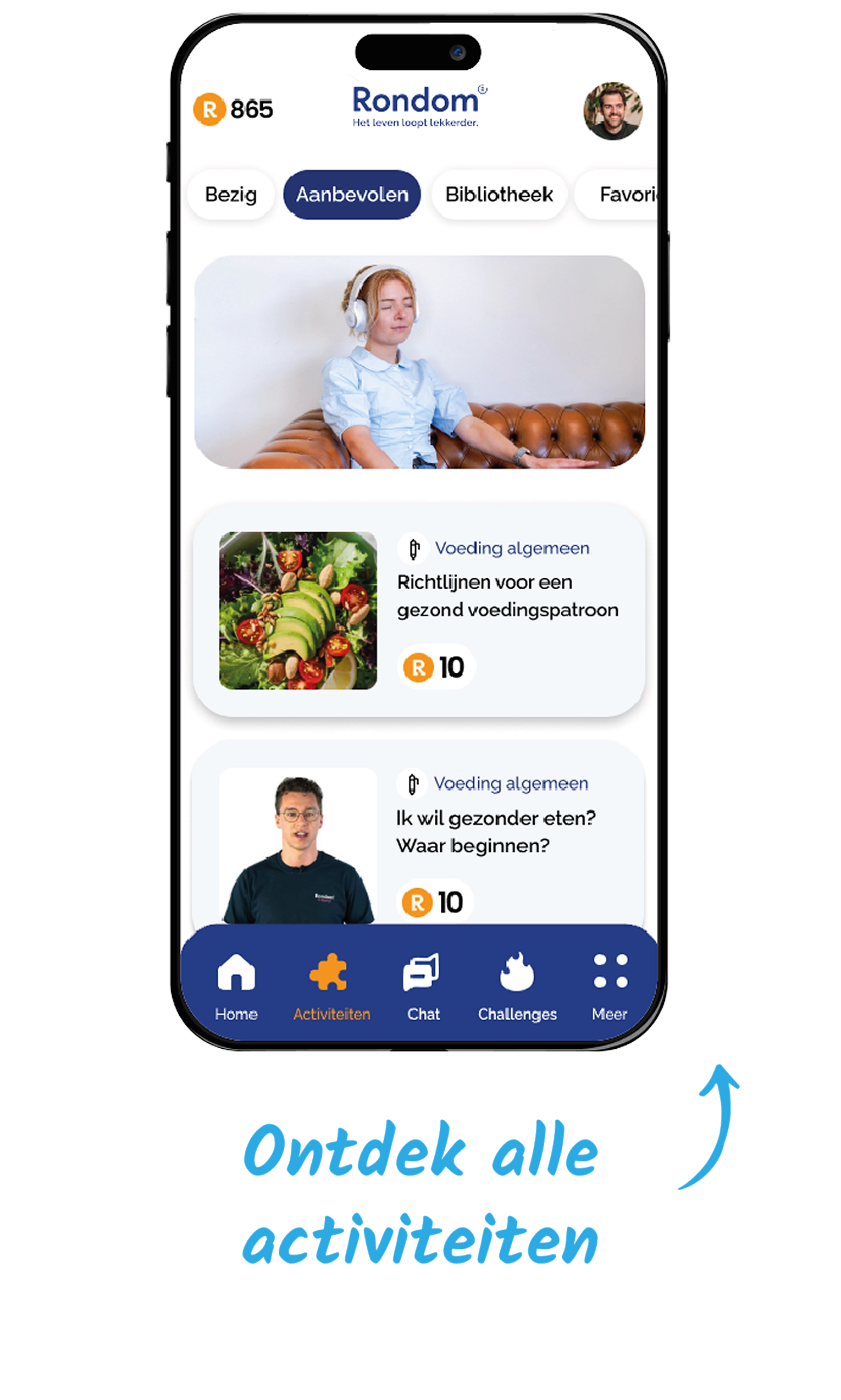
- find information, exercises and practical tips on topics such as exercise, nutrition, recovery and coping with fatigue;
- view the information and exercises that your practitioner has prepared for you;
- completing questionnaires;
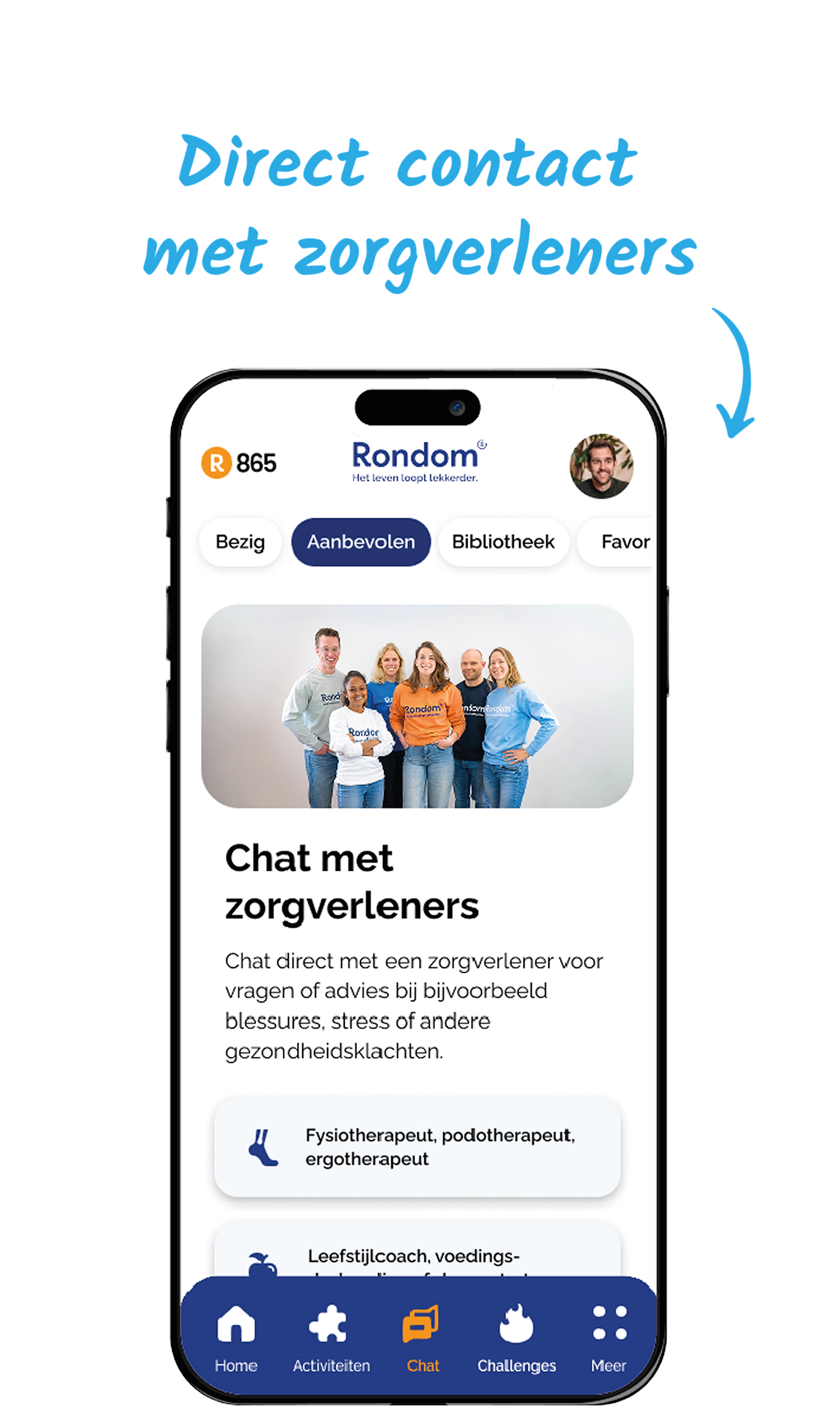
- stay in touch with your healthcare providers.
This way, you have information, exercises and appointments all in one place. You can view them at a time that suits you. This helps you discover what you can do yourself to manage your symptoms better. This can help you to continue doing the things that are important to you. The app complements your personal appointments.